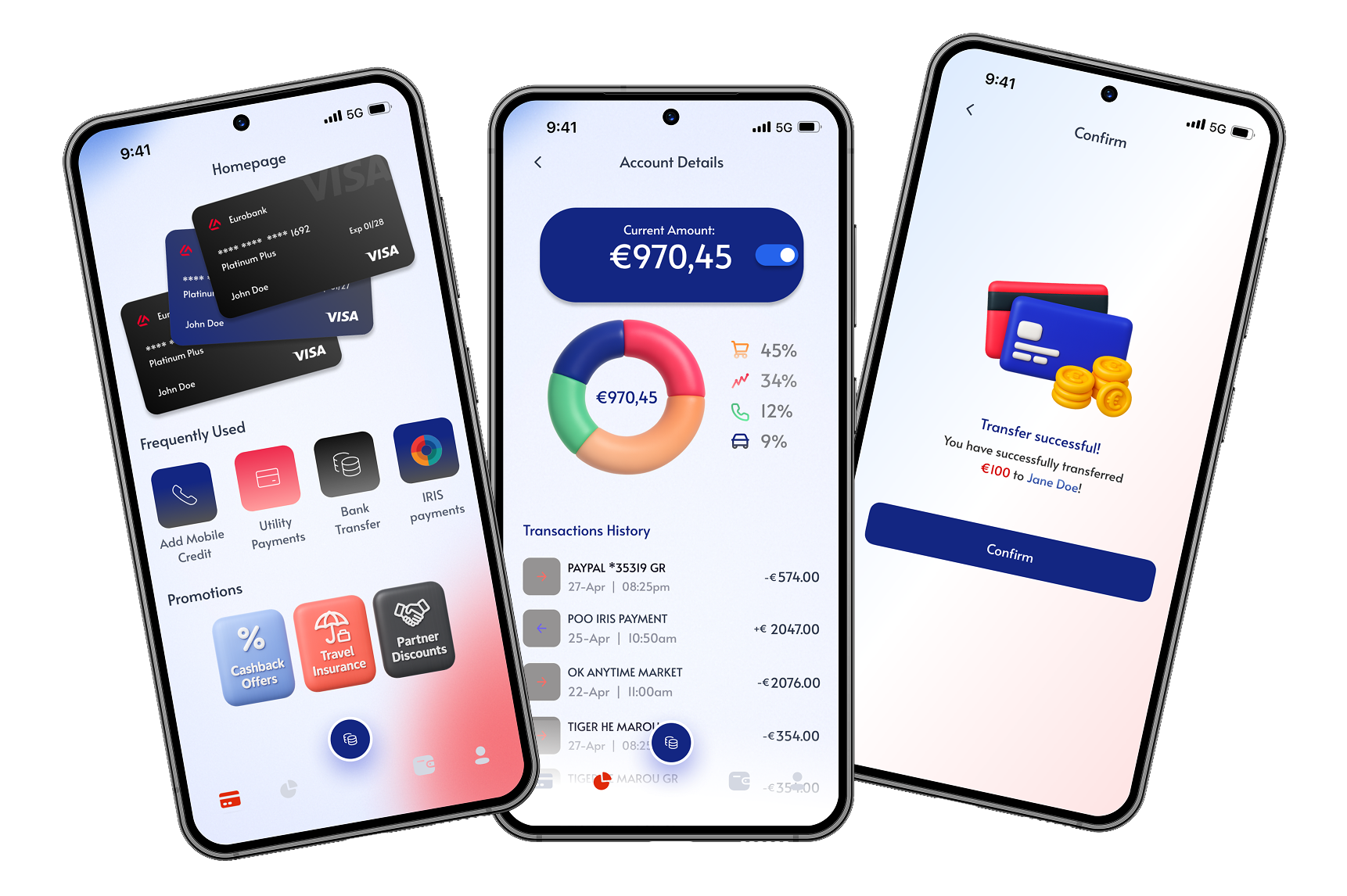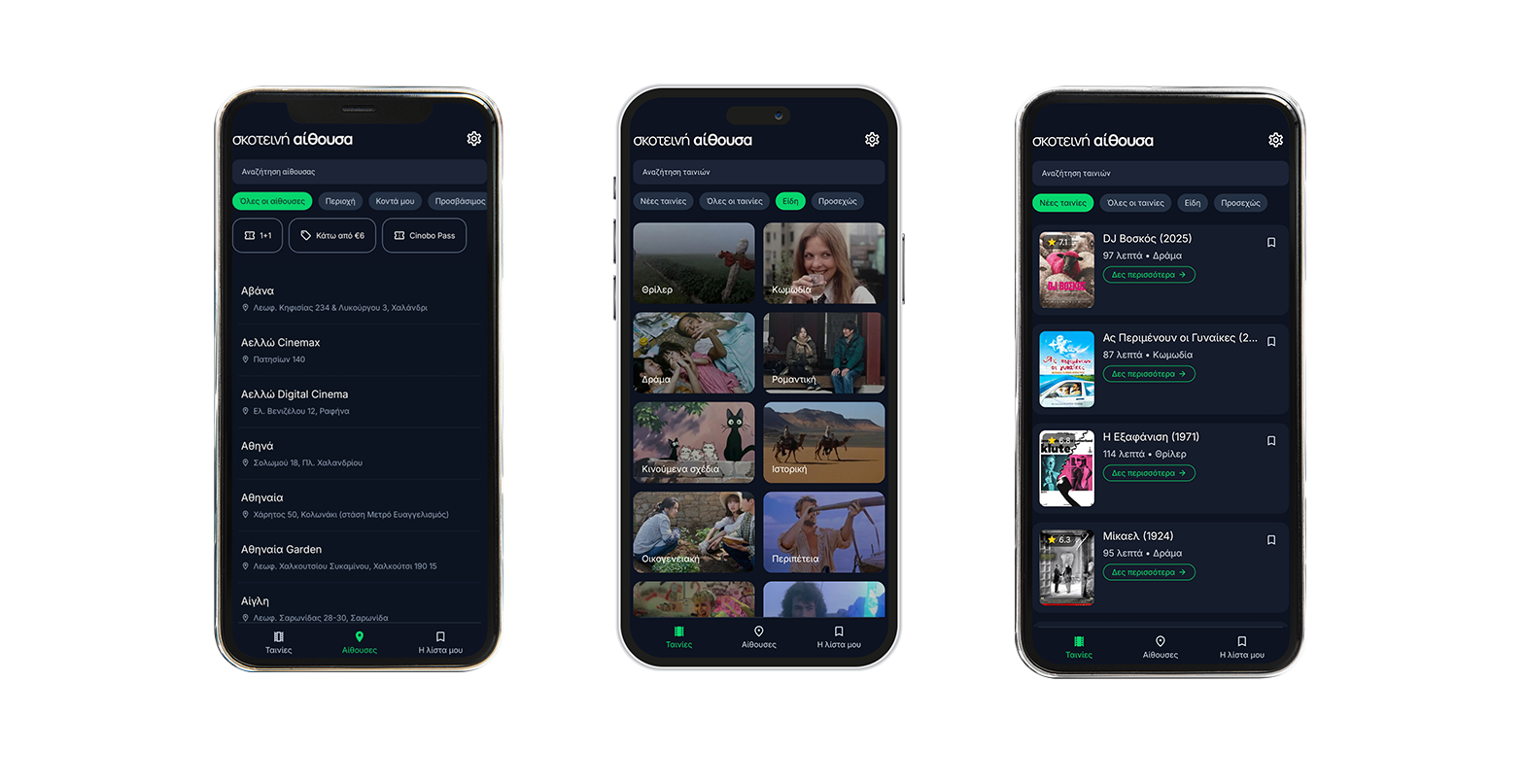
Available for work · Athens, Greece

Good design
is only half.
I do the half
that ships.

Design that holds up in production. Built by someone who understands both sides of the handoff.

scroll

Featured Project

Design + Development
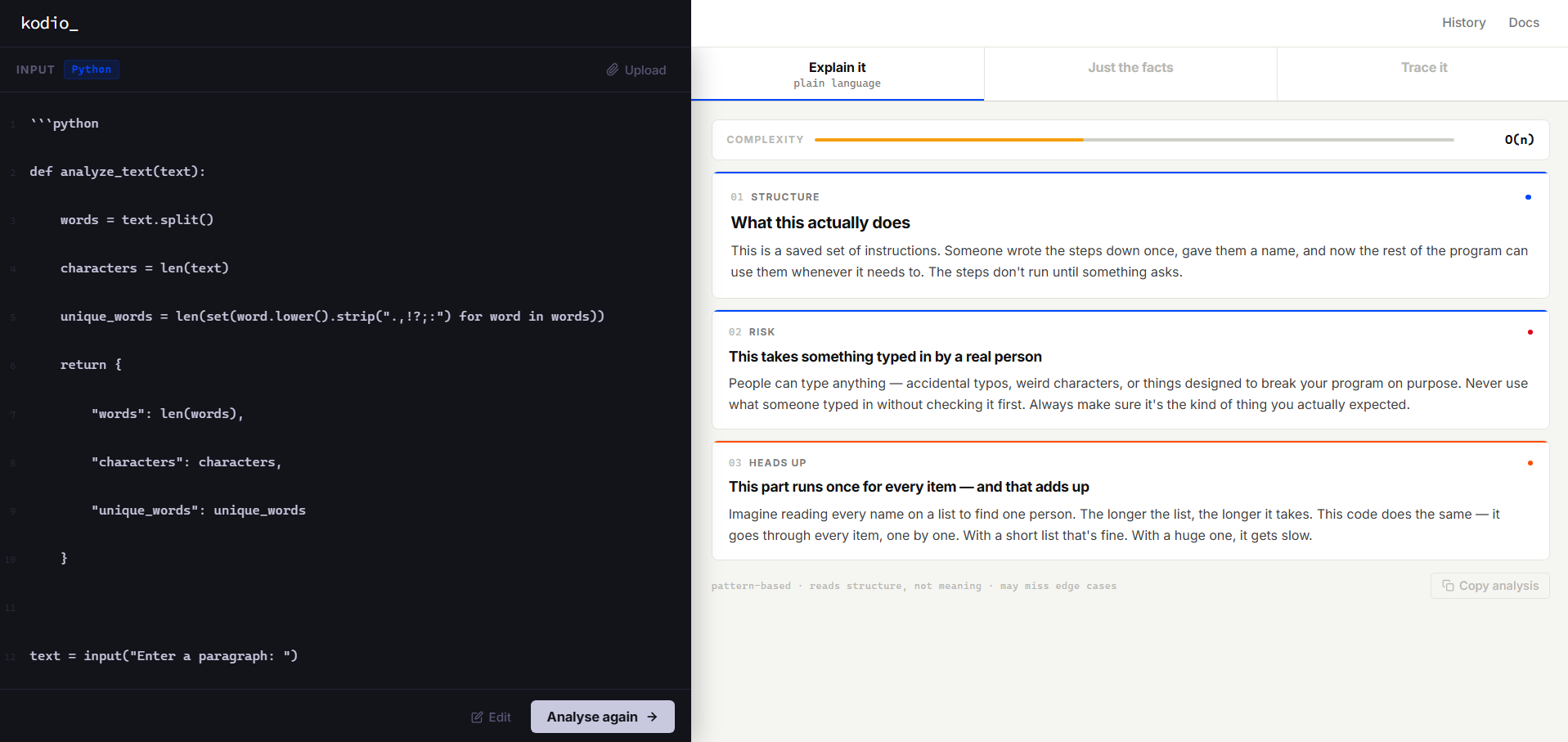
kodio — code reading tool

kodio

A code reading tool designed for two very different users — someone learning to code for the first time, and a developer reviewing unfamiliar work. One tool, two completely different mental models.

Most code explanation tools either talk down to beginners or bury experienced developers in noise. kodio separates those two needs into distinct modes — same content, different voice — so neither user has to fight the interface.

Key Design Decisions

  • Two-mode reading system — "Explain it" uses plain analogies with no assumed knowledge. "Just the facts" strips everything to signal only. The toggle isn't a preference setting — it's a fundamentally different reading experience for a different person
  • Directional layout — code sits left, analysis right. The user's eye moves left to right: from complexity toward clarity. The visual weight of the dark/light split makes that direction feel physical
  • Line-level connection — hovering any insight highlights the exact lines it refers to. Removes the "but where in the code?" friction that makes analysis tools feel disconnected from the thing they're analysing
  • Trace mode as execution, not a list — steps reveal one by one, mirroring how code actually runs. Designed to feel like watching something happen rather than reading a report

What I'd Improve

  • The "Explain it" copy was written by assumption — I'd validate it with real non-coders through usability testing
  • No onboarding moment — a first-time user has no signal for what to paste or what to expect
  • The empty state communicates format but not value — it should answer "why would I use this?" before asking for input

Case Studies

Approach

01

Map confusion
before opening Figma

I trace where users actually stall. Most redesigns fail because they address symptoms, not the structure underneath them.

02

Design with
the build in mind

I annotate decisions, flag constraints, and write specs as part of the design process — not an afterthought. Work that doesn't survive development isn't finished.

03

Break it before
someone else does

I test rough prototypes early and deliberately look for failure points. Catching breaks before the build is the cheapest iteration you'll ever do.

About

I design products that are clear to use and practical to build. My focus is reducing complexity — turning cluttered flows into interfaces that feel obvious in hindsight. I work across design and front-end, which means I think about constraints early and hand off work that doesn't fall apart in development.

Based in

Athens, Greece

Focus

UI/UX Design

Tools & Skills

Figma HTML CSS JavaScript Prototyping

Open to

Freelance · Remote · Hybrid